Phone: 604-683-2554 | Email: welcome@gordonhouse.org


Indigenous Food Sovereignty: 6 Actions Everyone Should Know
Caption: A group of food justice organizations and community members gather together to deepen conversations around Indigenous food sovereignty after hearing the Seeds of Sovereignty presentation.
On January 29th, 30 people came together for a thoughtful and inspiring presentation on Seeds of Sovereignty, an ongoing initiative focused on how Indigenous food sovereignty is alive and thriving within Indigenous communities leading this work. This initiative was born as a collaboration between Indigenous-led Community Food Centres, Right To Food’s Indigenous Network, and Right To Food itself, a national organization focused on – you guessed it – advancing the right to food.
Building on the Groundwork for Change framework the Indigenous network established in 2024 (check out their amazing workbook to deepen your knowledge of Indigenous food sovereignty!), the Seeds of Sovereignty initiative began simple: bring together like-minded Indigenous community food organizations to share what’s working. Qajuqturvik Community Food Centre in Iqaluit wanted to build relationships and strengthen the work that was already happening in communities across the Indigenous network.
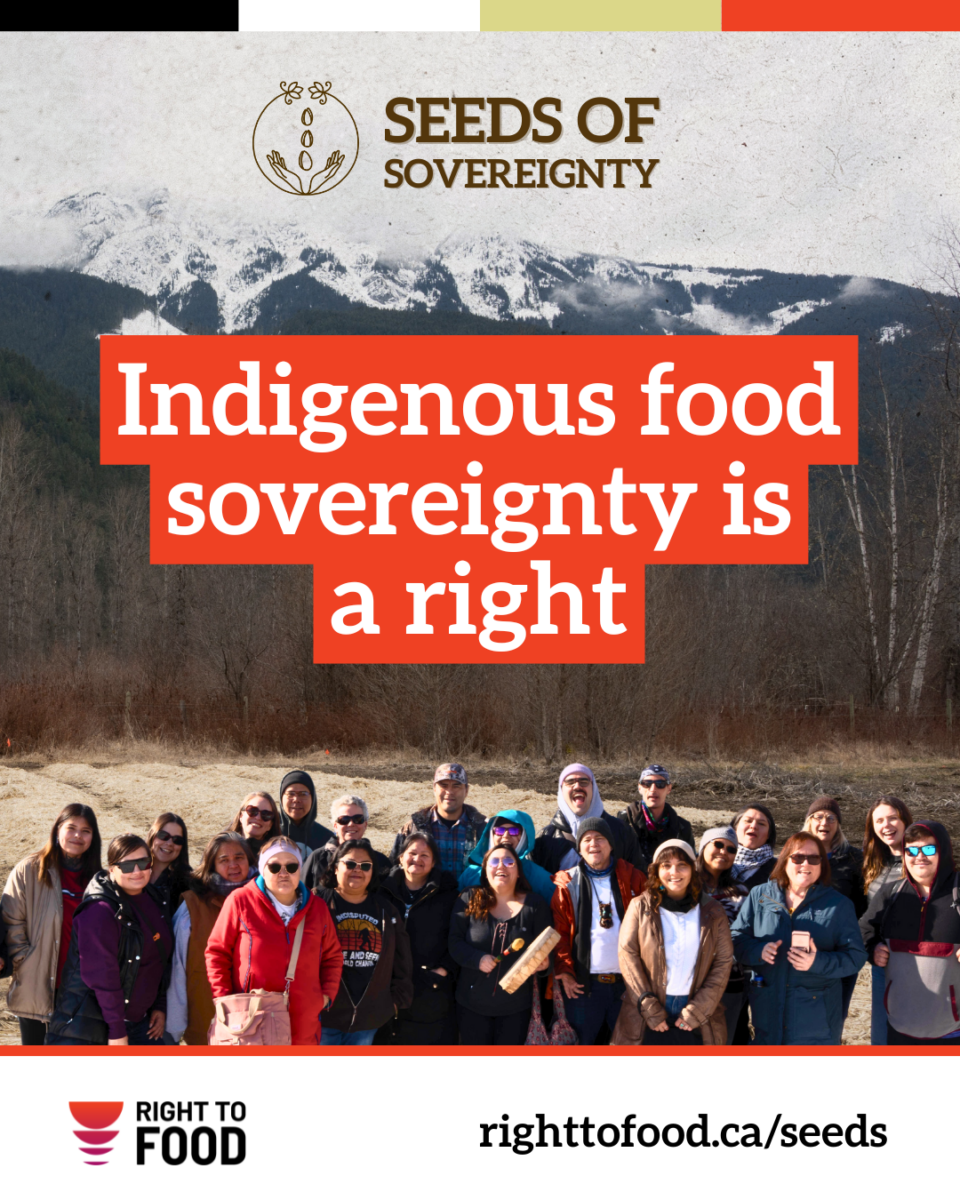
Caption: Seeds of Sovereignty campaign photo. The bottom of the photo shows Indigenous leaders and community members and Right To Food staff who attended the 2025 gathering in Líl̓wat Nation posing together and smiling. The photo says “Indigenous food sovereignty is a right.”
So, they gathered. In 2024 and 2025, leaders from Indigenous Community Food Centres and Right To Food’s Indigenous Network gathered in Iqaluit and Líl̓wat Nation. They shared knowledge, built relationships, and affirmed what many already know: food sovereignty is alive, it’s growing, and it’s guided by Indigenous leadership.
Seeds of Sovereignty shares that story through a Living Brief, a short documentary, and a story sharing kit to spread awareness about the initiative on social media.
The urgency of Indigenous food sovereignty – how communities are responding
This work is critical and pressing, and the numbers tell the story. The national food insecurity rate for the general population is 25.5%, with 19.1% experiencing moderate or severe food insecurity. This means that nearly 8 million people across Canada do not have access to sufficient income necessary to consistently afford the food they need to feed themselves and their families.
In comparison, 38.6% of Indigenous people aged 15 years and over experience food insecurity, with 33.1% experiencing moderate or severe food insecurity. Tellingly, these figures for Indigenous people exclude on-reserve First Nations people, who are known to experience high levels of vulnerability to food insecurity.
These aren’t just statistics – they represent families, Elders, and children whose relationships to food have been disrupted by colonial systems that don’t recognize Indigenous rhythms and governance.
Indigenous communities are working on solutions to these challenges every day. In addition to the innovative food systems work and relationships guiding Indigenous food sovereignty efforts, the Living Brief also includes 6 policy recommendations that provide a launchpad for advocating for federal policy changes that advance Indigenous food sovereignty, including:
🌻Advance the implementation of UNDRIP and enact an Indigenous Food Sovereignty Act;
🌻Ensure government benefit programs reflect Indigenous realities;
🌻Fund salaried land-based roles like hunters, foragers, and knowledge keepers as essential infrastructure;
🌻Reform public health, licensing, and food safety regulations to remove barriers that restrict the use of traditional food;
🌻Respect Indigenous governance, including forms of authority beyond Chief and Council; and
🌻Provide multi-year, unrestricted core funding aligned with Indigenous seasonal cycles and governance protocols for land-based food sovereignty work.
The Living Brief and short film are not the final word, they are touchstones in a growing conversation about how policy, funding, and practice can better reflect and respect Indigenous leadership. They also provide the foundation needed for food justice organizations to deepen their understanding, discussions, and efforts around Indigenous food sovereignty and what that can (and does) look like in our communities.
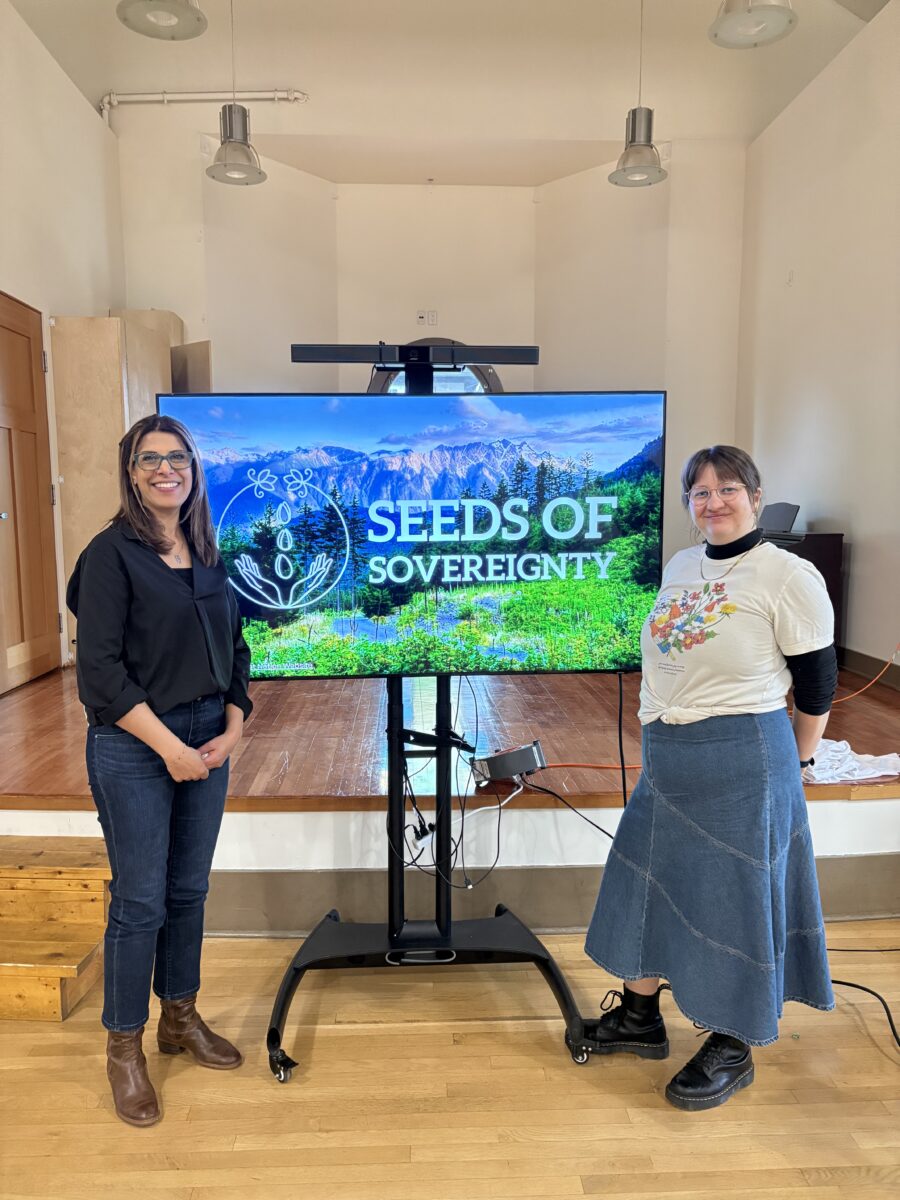
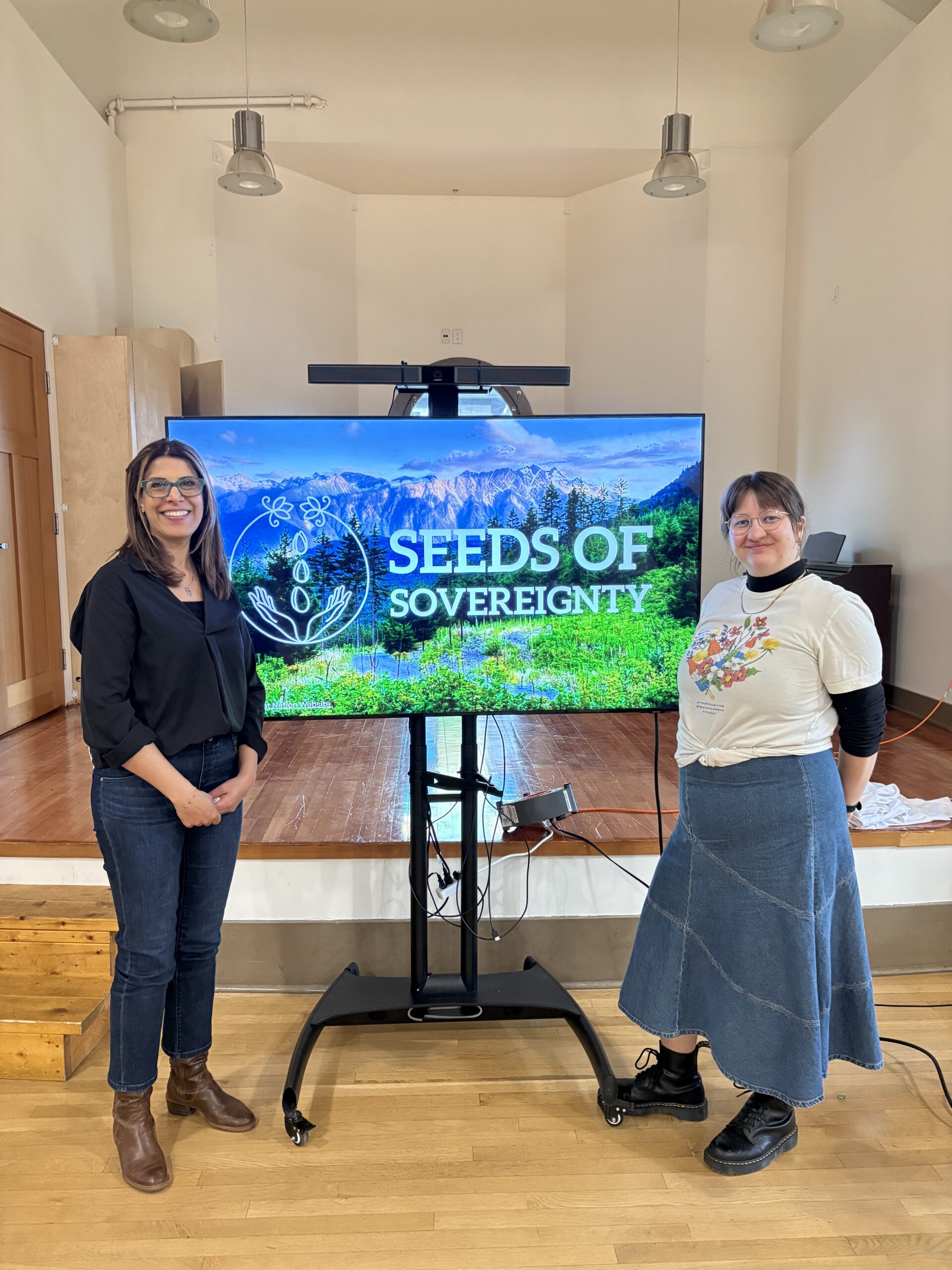
Caption: Iman Khalilavi, Kits Neighbourhood House (left) and Jordan Bultitude, Gordon Neighbourhood House (right) in front of the Seeds of Sovereignty presentation.
What Indigenous food sovereignty teaches us about food justice
That’s where Iman came in. As the coordinator of the Westside Food Collaborative in the Kitsilano-Point Grey neighbourhoods, Iman plays a critical role bringing food organizations together to strengthen relationships, build the capacity of important food programs, and create a sustainable, affordable, local food system alongside neighbours.
She organized a vibrant, engaged space through her “Seeds to Share” event where Gordon Neighbourhood House, Kits Neighbourhood House, and the Westside Food Collaborative learned together. Food organizations set up booths to showcase the important work they’re doing around food sovereignty, urban agriculture, food rescue, and policy change. The event was co-led with the UBC Centre for Engaged Learning, who also put together a map that showcased where Indigenous food sovereignty initiatives are happening across the traditional territories of the xʷməθkwəy̓əm (Musqueam), Skwxwú7mesh (Squamish) and Səl̓ílwətaʔ/Selilwitulh (Tsleil-Waututh) Nations, also known colonially as Vancouver. We talked, learned, and enjoyed a delicious lunch provided by Obanhmi.
To strengthen our community’s understanding of Indigenous food sovereignty, Iman graciously invited Jordan, the Food Justice & Poverty Reduction Analyst at Gordon Neighbourhood House, to share the Seeds of Sovereignty initiative with event attendees. Jordan also coordinates the BC Regional Advocacy Network in partnership with Right To Food, where they advocate for increasing incomes and Indigenous food sovereignty at the federal policy level. Together, we learned about some of the key pieces of work that have come out of the initiative, including storytelling, community knowledge-sharing, and policy recommendations designed to keep Indigenous food sovereignty in the national conversation. These resources reflect both the strength of Indigenous-led food systems and the barriers communities continue to face. At the same time, the presentation emphasized that this work is rooted not only in resistance, but in joy, community, ceremony, and intergenerational knowledge-sharing.
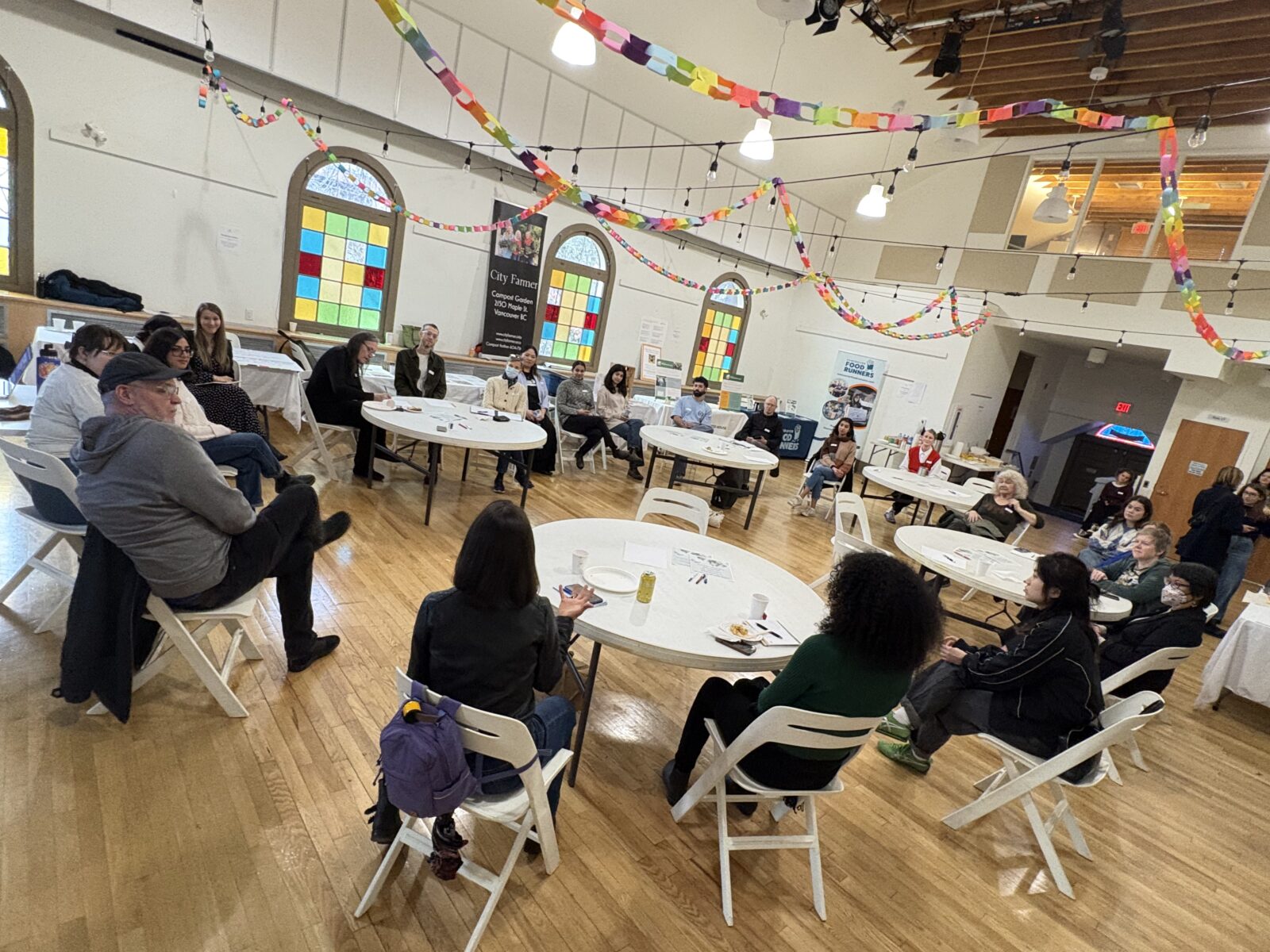
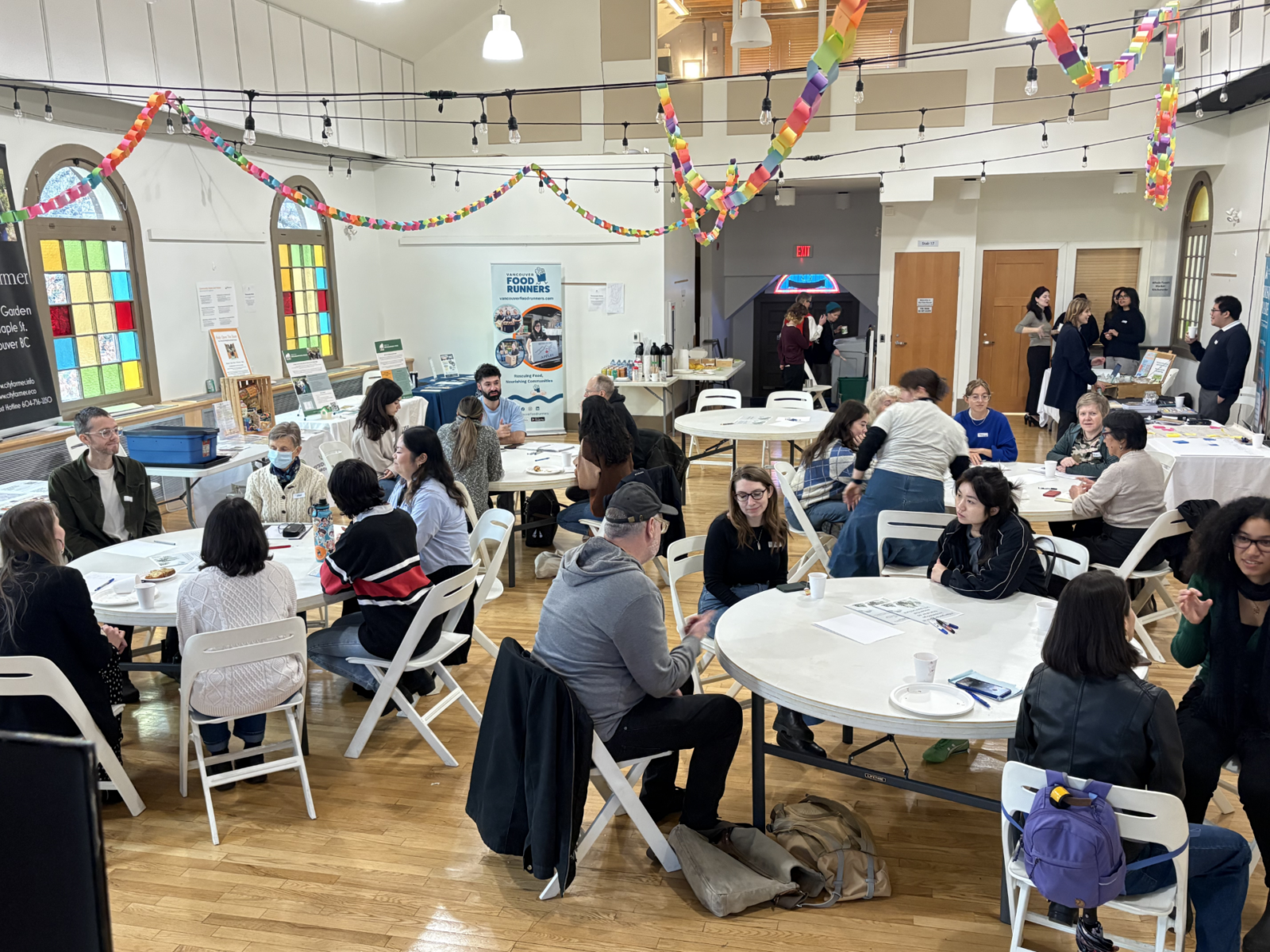
Caption: A group of event attendees joined together to have a large-group discussion around Indigenous food sovereignty after the Seeds of Sovereignty presentation.
After the presentation, attendees participated in in-depth group discussions focused on different areas of Indigenous food sovereignty. Together, people reflected on how Indigenous food sovereignty could be brought further into existing food justice work, and shared ideas about interesting and innovative Indigenous-led food initiatives happening in our own communities. These conversations created space for participants to move beyond listening and think more deeply about what solidarity, accountability, and action can look like in practice.
One of the most valuable parts of the event was the reminder that Indigenous food sovereignty must be understood on its own terms, and that there is so much to learn from the leadership, knowledge, and ongoing work already being carried forward in Indigenous communities across Turtle Island.
Feedback from the event was overwhelmingly positive, and we are grateful to the leaders of the Seeds of Sovereignty initiative for their work educating the public on food insecurity initiatives and policy recommendations, and for their ongoing leadership more broadly. Their work is helping to build stronger understanding, deeper relationships, and more grounded conversations about what food justice can and should look like.
Thank you to Kits Neighbourhood House and the UBC Centre for Engaged Learning for your collaboration. Check out these resources to learn more about Indigenous food sovereignty!
Leave a comment on this post or send an email to welcome@gordonhouse.org – how are you contributing to Indigenous food sovereignty in your community?
Resources & Deeper Learning
🌱Flip through the full Seeds of Sovereignty presentation here
🌱Read the Living Brief and share it with your communities
🌱Watch the short documentary
🌱Check out the Groundwork for Change workbook
🌱Learn more about the Indigenous food systems network, founded and curated by Dawn Morrison
🌱Find out what Right To Food’s Indigenous Network is up to on youtube
🌱Read more about Food Sovereignty & Harvesting, written by the Qikiqtani Inuit Association
🌱Check out some reflections by Right To Food on the Líl̓wat Nation gathering
References
- Li et al., Household Food Insecurity in Canada 2022, 4; Chan et al., FFNES Final Report for Eight Assembly of First Nations Regions: Comprehensive Technical Report, 56.
- Statistics Canada, “Food Insecurity by Selected Demographic Characteristics.”